The lithium battery economy, driven largely by the growing electrical vehicle market, presents opportunities for water and wastewater businesses across the value chain, according to a new report from BlueTech Research. Rechargeable lithium-ion (Li-on) batteries are used in smartphones and laptops as well as battery-powered cars and are driving the growth of technology across the battery value chain. Batteries now account for 73% of lithium use, a rapid rise since 2011 when it was just 23%.
Water is a critical resource for lithium battery recycling
BlueTech Research chief executive and founder Paul O’Callaghan said: “Increased lithium battery use has created a rapidly growing, globally transformative sector, with many opportunities for water and wastewater technologies. From lithium extraction to battery recycling, water is always a critical resource, which is why we saw the need to apply our expertise to this fast-moving market.”
The extraction and processing of lithium requires technologies that are similar, or in many cases the same, as those already used in water and wastewater treatment. As a result, opportunities for the water sector are growing in mining and extraction, refining and battery manufacture and recycling. Report author, Dr Kim Wu, a research analyst at BlueTech Research, says the expected growth in the lithium mining industry will offer ample opportunities for brine concentration and evaporation technologies, in particular.
“The world cannot reduce internal combustion engine carbon emissions without the growth of the battery industry,” she says. “This new lithium battery economy is changing well-established supply lines and creating a new hierarchy in the value chain, from mine to road.”
Water reduction goals require new technologies
A third of current lithium production is dependent on salar (salt flat) mining and there is pressure for the sector to reduce water consumption.
Hard rock mining has a much lower water footprint than salar mining. Nonetheless, about 73% of lithium mines operate in highly water stressed water regions, and operators are responding with aggressive water use reduction goals that will require deployment of new technologies for direct lithium extraction and brine concentration.
Recycling growth
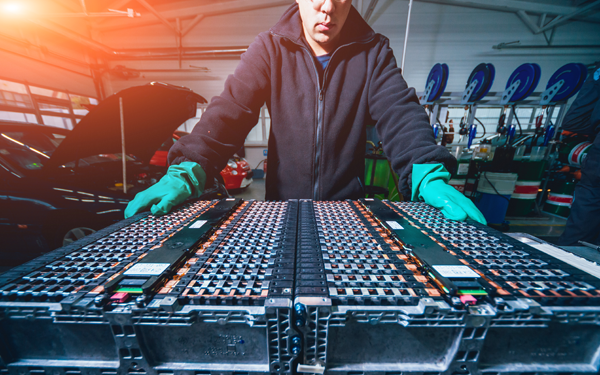
Battery recycling is beginning to have significant growth as electric vehicles reach the end of their service life. There is an array of innovations in battery recycling from existing, large recyclers extending their market footprint, to newer companies with technologies driven by reduced water and energy demands.
Emerging technologies
BlueTech uses powerful data modelling tools, along with the specialist knowledge of its in-house analysts to forecast the potential of emerging technologies and their markets. This latest report highlights the potential commercial breakthrough in direct lithium extraction (DLE) and alternative technologies for evaporation.
Of particular interest, according to BlueTech’s report, are highly selective adsorbents for DLE, membrane technologies including osmotic or membrane distillation processes for brine concentration.
Depending on the operations and results from the range of DLE pilot and demonstration projects taking place at various mining sites in Australia, South America and the UK, DLE technologies are expected to play a big role in lithium mining in the future. However, as the technologies are mostly at research or pilot stage, some industry experts interviewed for the report expect them to require more time to upscale and become fully established.
The full report, Water and the Lithium-ion Battery Value Chain, is available to BlueTech Research clients. To find out more visit www.bluetechresearch.com