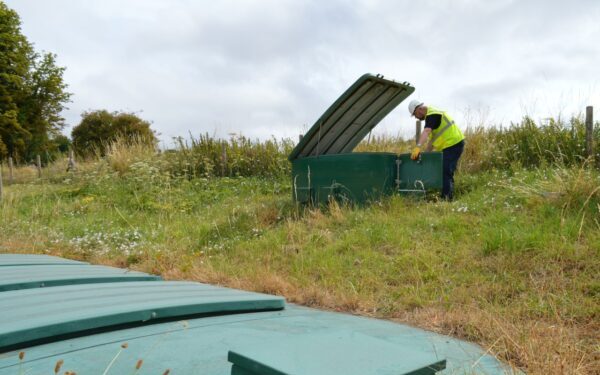
21.09.2022 Ι A simple adjustment to blowers on submerged aerated filter (SAF) technology is bringing significant energy reductions in wastewater treatment. The patented technology employs a submerged moving-bed, fixed-film reactor which can treat wastewater with greater energy efficiency compared to traditional SAFs, in a tighter site footprint whilst meeting environmental compliance.
Wastewater treatment as keystrategie
Making wastewater treatment more energy efficient is key to companies’ business strategies. For a water company with over 600 treatment works, around 55% of energy usage is in the treatment of wastewater, with its electricity bills coming in at around £25 million a year – that is before the recent increases.
The water sector’s Net Zero 2030 Routemap notes an upward trend in electricity consumption between 2015 and 2019, attributed in part to an increase in water and wastewater treatment driven by rising environmental standards, and more intense rainfall due to climatic changes. Water companies are investing in energy efficiency interventions, with suppliers taking a lead in the development of new technology.
Water recycling specialist WCS Environmental Engineering (WCSEE) has undertaken a five-year study, alongside University of Portsmouth researchers, at Petersfield wastewater treatment works in Hampshire, to enhance process efficiency of its patented Hybrid-SAF technology.
Automated timers regulate the process
One outcome of the research is the introduction of automated timers to operate the blowers which provide the air for biological treatment processes in WCSEE SAF units. Blowers typically operate 24/7, accounting for more than 90% of the energy used in a SAF unit. They are now timed to pulse air into the process for 15 minute intervals, rather than operate continuously. This will cut the amount of energy consumed by the blowers by up to 50%, addressing the market need for net zero carbon, reducing energy consumption, and cost efficiencies. The introduction of a timer is a very low cost method of power reduction.
The challenge of finding the optimum time period
While the concept was simple, finding the optimum times to turn blowers on and off, and determining ideal time-lengths, proved more of a challenge. Part of the research involved exploring the impact of turning the blowers off for longer periods, including overnight.
In general, it was found that the HiPAF saw a reduction in dissolved oxygen after 20-30 minutes. This made it possible to set timers to 15 minutes on and 15 minutes off – so, in operation for half the amount of time while still providing effective aeration for reliable treatment. The 15-minute intervals give the added advantage of not exceeding the hourly on-off cycles required by blower manufacturers to maintain guarantees.
To the website of WCS Group