Generic filters
FS Logoi

Plastic waste: New partnership of Danish companies

The Danish Technological Institute has united major Danish companies in the Circular Industrial Plastics (CIP) project to increase recycling of industrial plastics by at least 20 percent before 2025 and to create a new platform for recycling plastics in Danish companies. The project is supported by the Ministry of the Environment’s MUDP (the Danish Eco-Innovation […]

von | 15.08.22

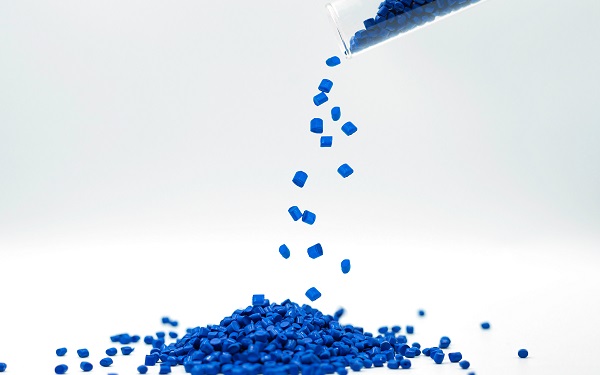
close up plastic bead on with background, master batch, polymer resin, plastic granulate for injection molding process

The Danish Technological Institute has united major Danish companies in the Circular Industrial Plastics (CIP) project to increase recycling of industrial plastics by at least 20 percent before 2025 and to create a new platform for recycling plastics in Danish companies. The project is supported by the Ministry of the Environment’s MUDP (the Danish Eco-Innovation program), and project partners include Grundfos, Coloplast, Novo Nordisk, Danfoss, Topsoe, Grundfos and COOP.

Burnt or deposited after use

Today, many industrial products made of plastic are burnt or deposited after use because they either are not designed for recycling or because the available recycling technologies cannot handle the products. Several of the largest Danish companies prefer a change, and they would like recycling to increase by at least 20 percent before 2025.

A journey of partnership and collaboration

Project partner Grundfos has already taken important strides in addressing a better way of using plastic in its products. Recent successes in optimizing the reuse of production waste and the Grundfos take-back programme demonstrates its focus on this area. Nonetheless, this is a journey that requires partnership and collaboration.

“Industrial plastic is a very important material group, and it is possible to create functional design from the material. However, Grundfos takes responsibility for the full value chain and for the end-of-life product. It is a very complex task to match materials and end-of-life circular technologies. Grundfos cannot accomplish that on its own. So besides inspiring other companies, Grundfos also wants to strengthen its ‘toolbox’ regarding legacy products and the design of new products,” says Preben Jakobsen, Chief Engineer and Grundfos representative for the CIP project steering group.

Research plastic recycling technologies

CIP provides the opportunity to work alongside recyclers, technology providers, and knowledge institutions to enable circular value chains that will in turn, generate value for Grundfos and the industry. Together, the businesses will explore various plastic recycling technologies and evaluate how these technologies perform on the specific types of technical plastics commonly used in our products.

Learn more about CIP here.

Bildquelle, falls nicht im Bild oben angegeben:

Close up of plastic polymer granules. (Photo: AdobeStock)

Jetzt Newsletter abonnieren

Immer auf dem aktuellen Stand, alle 2 Wochen in Ihrem Postfach.

Hier anmelden

Separator für hochdichte Fermentationsbrühen

Alfa Laval erweitert sein Portfolio um den Separator Culturefuge 200 B. Das System ist für die kontinuierliche Separation hochdichter Fermentationsbrühen in biopharmazeutischen Prozessen ausgelegt und richtet sich insbesondere an Produktionsanlagen im mittleren Maßstab.

mehr lesen
EU-Projekt entwickelt Verfahren zur CO2-Nutzung

Das EU-geförderte Forschungsprojekt REACT entwickelt unter Beteiligung der Empa ein elektrochemisches Verfahren, mit dem industrielle CO₂-Emissionen in Ethylen umgewandelt werden sollen. Ziel ist es, fossile Rohstoffe in der chemischen Industrie teilweise zu ersetzen und Kohlenstoffkreisläufe zu schließen.

mehr lesen
Workshop zu biobasierten Polymeren

Der Fraunhofer Cluster of Excellence Circular Plastics Economy (CCPE) veranstaltet am 15. September 2026 auf dem Dechema Forum in Frankfurt einen Workshop zu biobasierten Polymeren. Im Mittelpunkt stehen deren Potenziale für die Kreislaufwirtschaft sowie der Transfer in industrielle Anwendungen.

mehr lesen
Kreislaufwirtschaft: Förderung für Forschungsanlage

Die Hochschule Pforzheim erhält Fördermittel für den Ausbau ihrer Anlage zur elektrodynamischen Fragmentierung (EDF). Mit dieser Technologie sollen sich Verbundwerkstoffe gezielt auftrennen und wertvolle Rohstoffe für die Kreislaufwirtschaft zurückgewinnen lassen.

mehr lesen
Homogenisatoren für kleine und mittlere Produktionsanlagen

Gea erweitert sein Portfolio um die KOB-Serie mit Hochdruckhomogenisatoren für kleine und mittlere Produktionskapazitäten. Die Baureihe arbeitet mit Drücken bis 400 bar und ist für Anwendungen in der Lebensmittel-, Getränke-, Chemie- und Körperpflegeindustrie ausgelegt.

mehr lesen

Sie möchten die F&S Filtrieren und Separieren testen?

Bestellen Sie Ihr kostenloses Probeheft

Überzeugen Sie sich selbst: Gerne senden wir Ihnen die F&S kostenlos und unverbindlich zur Probe!

Finance Illustration 03